PandionAI turns satellite data into decision-ready intelligence, helping organizations take important early actions
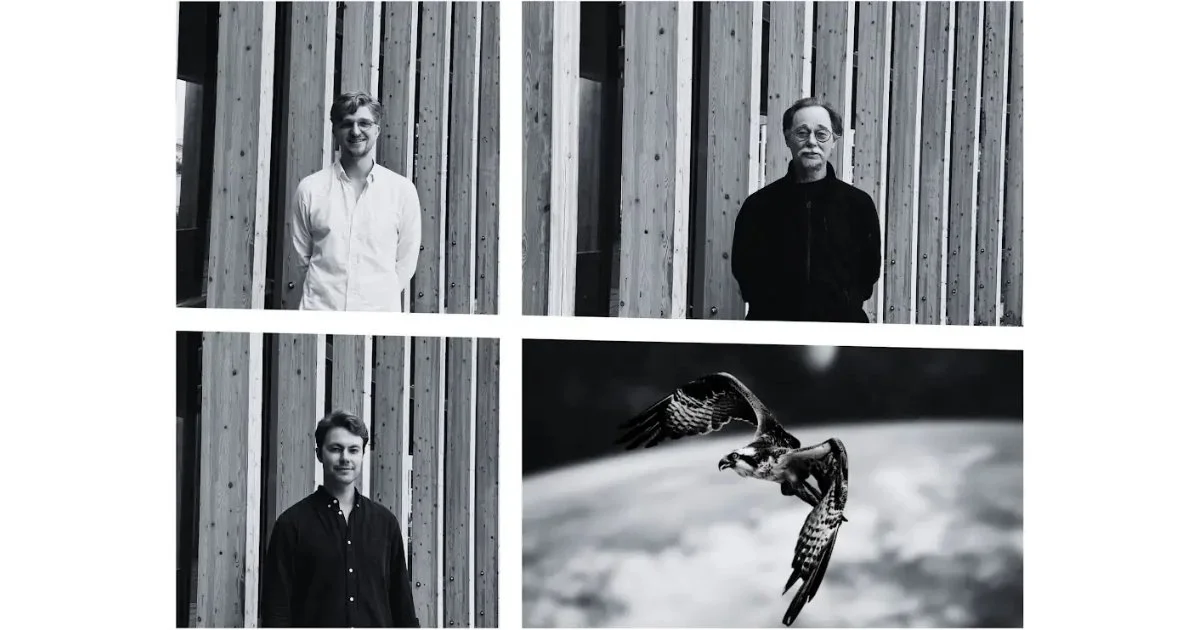
Team PandionAI
PandionAI's AlertSat platform combines satellite Earth observation data with AI to detect wildfires, storm damage and vessel activity, giving organizations across Europe a way to act before problems escalate. In this interview, Markus Skogsmo shares how the ESA BIC Sweden Alumni has evolved from early-stage testing to a functioning commercial platform, what is next for them and advice for founders maybe wondering if their business is "space enough" for the industry.
Hi Markus, tell us about PandionAI!
We turn raw satellite data into decision-ready intelligence. We solve a problem that many organizations live with but rarely name directly, they carry responsibility for large, remote, or hard-to-monitor areas, such as forests, power grids, or coastlines, without having continuous visibility into what is actually happening there. Our AlertSat platform automatically detects and alerts on relevant events, such as wildfires, storm damage to infrastructure, or vessel activity, so our customers can act early rather than reacting after the fact.
AlertSat is built entirely on satellite Earth observation data, both optical and radar imagery, combined with our own AI models to detect and interpret changes on the ground. Space technology is the foundation of everything we do. It is the sensor layer that gives our AI models eyes, allowing us to monitor forests, energy infrastructure, and coastal waters at a scale and frequency that would not be possible using ground-based methods alone. We work with forestry companies, energy utilities, and maritime authorities across Europe.
At what stage was PandionAI when the incubation with ESA BIC Sweden started and what’s changed since then?
When we joined ESA BIC Sweden, PandionAI was still in an early, exploratory phase, testing our detection algorithms on a handful of use cases and refining our understanding of where the need was greatest.
Since then, we have grown into a company with a functioning commercial platform, AlertSat, active pilot projects across the wildfire, energy, and maritime domains, and a growing team. We have also built a strong track record of European grant-funded research collaborations, which has been instrumental in developing and validating our technology.
What’s in the pipeline?
Our main focus right now is converting our pilot projects into long-term commercial partnerships, particularly within wildfire and storm damage detection for forestry and energy customers across Europe. We are also expanding our maritime domain awareness capabilities together with European partners and continuing several EU and national grant-funded research projects that push our AI models forward. Our ambition is to establish AlertSat as the default early-warning layer for any organization responsible for monitoring large or remote areas.
What thoughts do you have about the Swedish and European space industry right now and what do you think needs to happen for more companies to succeed?
I believe the Swedish and broader European space industry is going through an important shift, from a sector historically focused on building and launching satellites, to one where the real value increasingly lies downstream, in turning that data into services that solve concrete problems for organizations outside the space sector. Sweden and Europe are strong at early-stage support, institutions such as ESA BIC, Vinnova, and the Swedish National Space Agency provide excellent early funding and validation opportunities.
What needs to happen next is closing the gap between that early support and real commercial adoption. Procurement processes, both public and private, need to become more open to newer companies, and more organizations need to be willing to test and adopt space-based solutions rather than defaulting to established, non-space alternatives. The technology is ready, the main barrier now is market access.
What would you say to a founder who is unsure whether their company is "space enough" to join the industry and maybe is thinking of applying to ESA BIC Sweden?
My advice would be to stop asking whether you are "space enough" and start asking what problem you are solving. Space is, in the end, an infrastructure, a way of collecting data or providing a capability that would otherwise be difficult or impossible to achieve. If satellite data, communications, or positioning plays a meaningful role in solving a real problem for a real customer, your company belongs in this industry, whether or not you build satellites yourself.
I would strongly encourage any founder in that position to apply to ESA BIC Sweden. The programme provides funding, but also a network and validation that is hard to get elsewhere at an early stage.