StarDrive Aerospace is building credibility in space tech: “Space companies do not succeed by being vague”
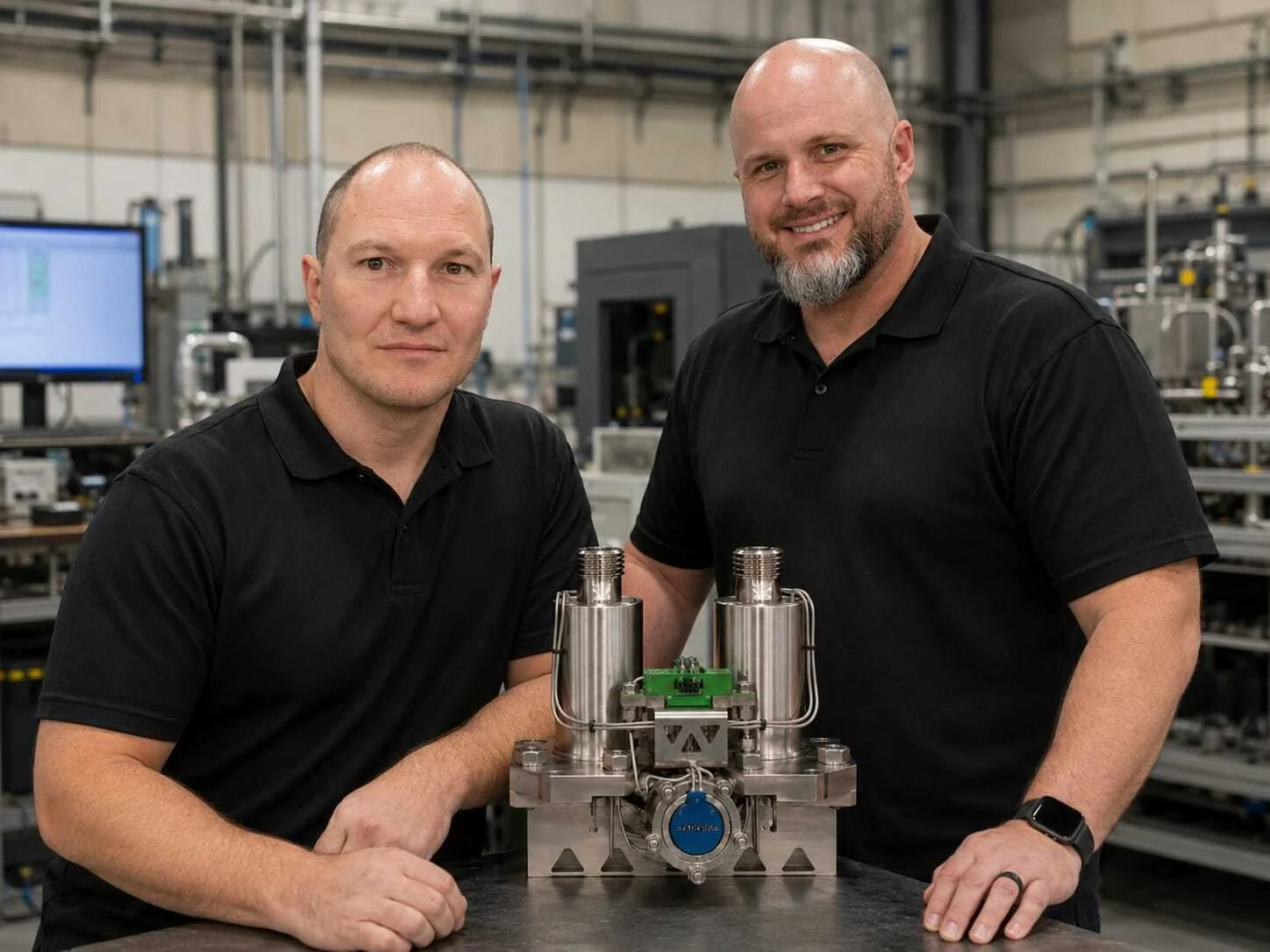
StarDrive Aerospace - an ESA BIC Sweden incubatee - shares why real problems matter more than “cool technology,” what startups often underestimate about the space industry and why credibility, structure and flight heritage are essential if you want customers to trust your hardware in orbit.
How and when did your journey begin as a startup, working with space related tech?
StarDrive Aerospace was founded in Sweden in 2024, with the company based in Västerbotten and manufacturing planned for Sweden. We started from a simple observation: satellites are becoming cheaper and easier to launch but moving them safely and efficiently once they are in orbit is still too hard, too slow and too expensive.
The technical work began before the company was formally registered, with early propulsion design and testing already under way. Our first successful test fires were completed in early 2024, which gave us the confidence that the core technology worked and that there was a real company to build around it.
For us, the journey started with hardware, fire, testing and the belief that Europe needs more agile suppliers for satellite mobility.
What does StarDrive Aerospace do and what is your aim with your startup?
We develop modular chemical propulsion systems for small and medium satellites. Our systems use cleaner, non-toxic propellants instead of traditional fuels, which are toxic, expensive to handle and under growing environmental and regulatory pressure.
Our aim is to make satellite propulsion faster to procure, easier to integrate, safer to handle and more affordable. Satellites increasingly need propulsion for orbit raising, collision avoidance, altitude control, end-of-life deorbiting and mission flexibility. Without propulsion, many satellites are limited in what they can do after launch.
Our technology is built around a modular architecture, including proprietary designs, which allows us to adapt propulsion systems to mission needs without starting from scratch every time.
The long-term ambition is clear: become a European supplier of sustainable in-space mobility systems, starting with propulsion and expanding over time into broader in-space services.
What have you been up to since you started your incubation with ESA BIC Sweden?
Since starting the ESA BIC Sweden incubation, we have focused on turning StarDrive from a promising propulsion concept into a credible propulsion company.
The work has been split across technical and commercial tracks. Technically, we have continued developing our propulsion system architecture, including thrusters, tanks, valves, ignition systems, electronics and our complete systems. Our earlier prototype had already achieved more than 200 seconds of cumulative hot-fire testing and the focus now is qualification, reliability, and preparing the system for customer and mission discussions.
Commercially, we have been refining our customer segments and speaking with potential partners and customers. In space hardware, customers buy more than just performance, they buy confidence. That means testing, documentation, credibility, and a clear route to an in-orbit demonstration. ESA BIC Sweden has helped us sharpen that route.
What is in the pipeline for you now?
The next phase is about qualification, demonstration and commercial traction.
Our pipeline includes continued development of our 1N, 5N, 20N, and 200N propulsion range, qualification campaigns for thrusters, tanks, valves and electronics and assembly of a full propulsion demonstration unit that we can show to customers, investors and partners.
We are also working toward flight heritage. That is one of the biggest gates for any space hardware startup. Ground testing proves that the system works. Flight heritage proves that customers can trust it.
Alongside the hardware work, we are building partnerships with universities, satellite manufacturers, integrators and early commercial missions. Our immediate focus is securing the right first missions, not just any first missions.
What do you think of the space industry in Sweden right now and in the future?
Sweden has a strong space base, but it still has room to become more ambitious in hardware, manufacturing and commercial space infrastructure.
There is already serious capability here: Esrange, established space companies, strong universities, industrial engineering talent and a culture that understands quality and safety. That matters in space. You cannot fake engineering discipline once your product is in orbit.
The opportunity now is to connect Sweden’s traditional industrial strengths with the needs of the new space economy. More satellites mean more demand for propulsion, testing, components, software, ground systems, space traffic management and sustainable mission design.
The future Swedish space industry should not only be about research and large institutional projects. It should also produce more export-ready space companies. Small teams, real hardware, global customers. That is where Sweden can punch harder.
What advice would you give to other startups thinking about joining the space industry or applying to ESA BIC Sweden?
Start with a real problem. Not a cool technology looking for a home. Space is attractive, but it is unforgiving. Customers care about reliability, mission risk, documentation, standards and whether your company will still exist when they need support. A prototype is not enough. A pitch deck is not enough. You need a credible path from concept to qualification, then from qualification to mission use.
For your application, be practical and honest. Show what you are building, what technical risk remains, how the funding will be used and why incubation changes the odds. Do not make the application vague. Tie the support to work packages, milestones and deliverables.
Also, speak to people before applying. The dialogue matters. It helps you understand whether the programme fits your company and it helps you frame the application properly.
What has been the most valuable part of being in ESA BIC Sweden?
The most valuable part has been credibility and structure. For a young space hardware company, credibility is oxygen. ESA BIC Sweden gives us a stronger platform when speaking with partners, customers, investors and technical stakeholders. It signals that the company has passed a serious review and is building within a recognised European space ecosystem.
The structure is just as important. ESA BIC forces a startup to turn ambition into milestones, budgets, deliverables and evidence. That discipline is useful. Space companies do not succeed by being vague.
The access to technical, business, funding and network support through ESA BIC Sweden and Arctic Business has also helped us focus on the right next steps: qualification, IP, investor readiness and partnerships for flight heritage.